
•mike

Creator Spotlight: Deron Bennett on Lettering and Writing
Deron Bennett is a comic book letterer and the owner of AndWorld Design, a lettering and production studio. He earned an Eisner nomination for his work on Jim Henson's Tale of Sand, and he lettered Canto at IDW. AndWorld now letters Canto: The Clockwork Chronicles, which launches from Dark Horse on November 18.
He writes stories too, in Project: Cryptid #8, DC Power 2024 and Jim Henson's The Storyteller: Shapeshifters #4. We asked him how Canto's lettering carried across three letterers, what touch-up means on a Taiyo Matsumoto book, the habit he breaks first in new letterers, and what comes next.
mike

For readers who might not know your work yet, how would you describe what you do?

You would think this question would have a pretty simple answer, but I always stumble here. It used to be easy. I'd just say, "I'm a comic book letterer." But nowadays, I wear a lot of different hats.
I own AndWorld Design, a comic book lettering studio where I manage a team of letterers working on titles for various publishers. Beyond lettering, I also handle graphic design, production, writing, editing, mentoring, and a bunch of other jobs that are honestly too many to list or keep straight in my head.
So, the short answer? I'm a comic book creator.
mike
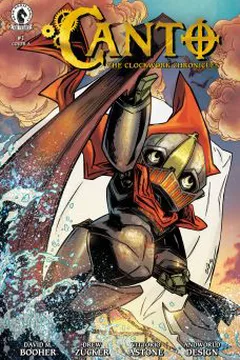
Canto: The Clockwork Chronicles #1 launches from Dark Horse on November 18 with AndWorld on letters, and Canto is a book you've lettered since its IDW days. Walk us through how the lettering look gets decided when a series you know this well starts a new era.
We try to maintain the general look of the lettering throughout the series, making subtle updates along the way so there aren't any jarring departures from what we've established. That way, readers can appreciate the continuity of the series, even as the creative team evolves.
One important thing to note is that we've had three different letterers carry the torch, from my initial approach at IDW to Morgan Martinez's iteration and now Justin Birch taking the lead.
Throughout that process, I think we've managed to maintain a consistent visual language while still allowing each letterer's creative approach to shine through.


mike
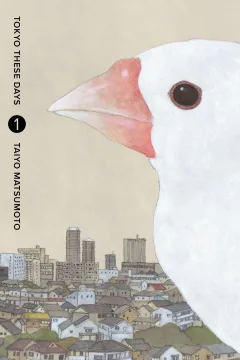
Taiyo Matsumoto's Tokyo These Days from VIZ credits you with "touch-up art" as well as lettering. What does the touch-up part of that job involve on a Matsumoto book?
I'm probably dating myself here, but when I started lettering manga in the early 2000s, we called it "retouch." It's pretty similar to what people understand about photographic retouching.
Essentially, we're editing the artwork within a panel to remove the existing Japanese sound effects or other typography, then recreating that lettering in English while maintaining the original visual style.
When it's done well, the result should be seamless, not just a patch. We're not simply hiding the old text underneath something new. We're erasing it, reconstructing the artwork where necessary, and integrating the English sound effects in a way that feels like they were always part of the original design.
mike
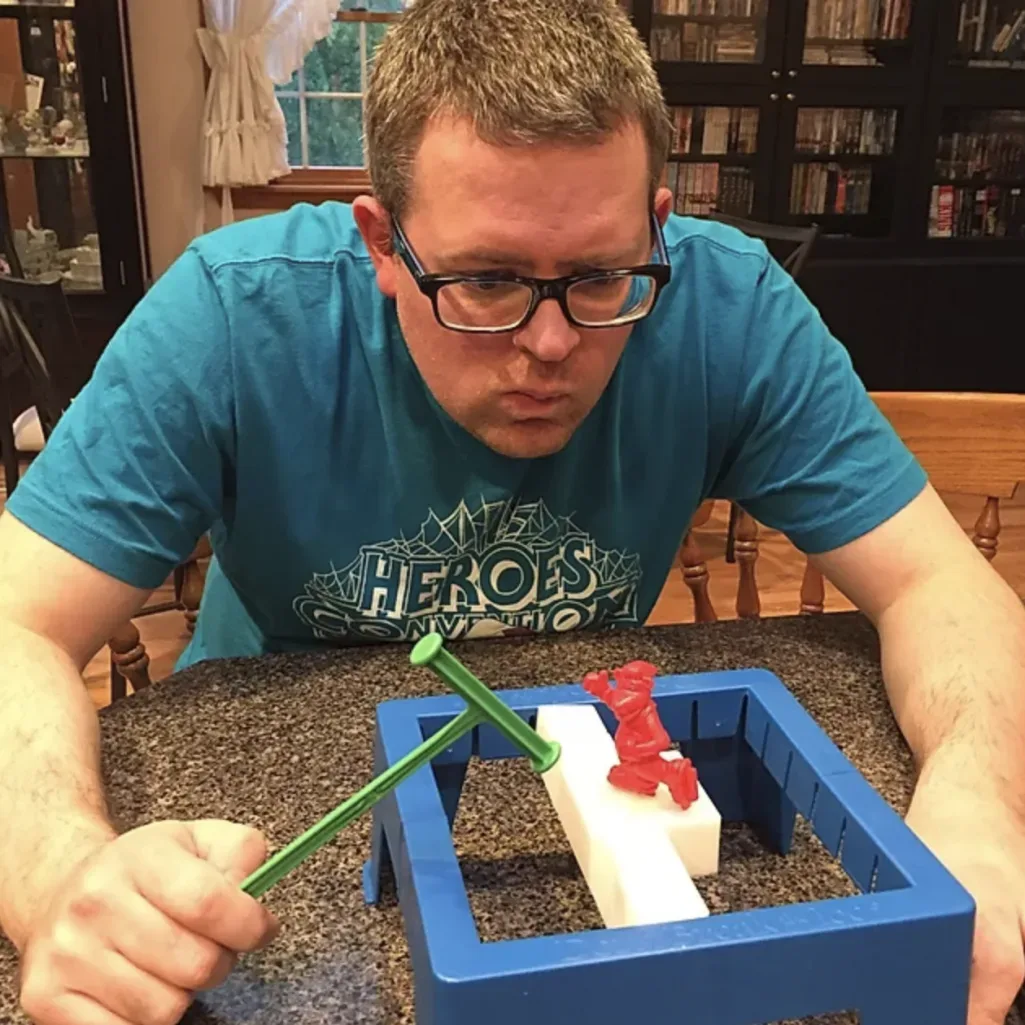
Now that you're writing stories as well as lettering them, how much do you write with the letterer in mind?
It's pretty much automatic at this point. I understand things from the letterer's perspective, so my scripts naturally reflect that.
I'll include notes about maintaining reading order, like making sure the first speaker is positioned on the left when necessary. I also know that dialogue-heavy scenes don't always work well with crowded panel layouts. If there's a lot of dialogue, you generally want larger, more open panels to accommodate it.
Even the way I format my scripts keeps the letterer and the rest of the creative team in mind. Making comics is a collaborative process, and the script is a working document that other people need to interpret and build upon. I'm always conscious of that.
mike
"Lost At Sea," your DC writing debut in DC Power 2024, was drawn by Milestone co-founder Denys Cowan, and you've said Milestone was the turning point that made you a regular at the comic shop. What was it like seeing him draw your script?
Life goals achieved!
If you had told teenage me that one of my heroes would someday be drawing a comic I wrote, I probably would've said you were crazy.
It was unreal to see that actually materialize. And for it to happen on my DC writing debut, to boot? That's something I'll never forget.


mike
Your Project: Cryptid #8 story went after the Jersey Devil. How much of your own Jersey made it into that story?
Too much! I've got little Easter eggs sprinkled throughout the story. Even my hometown makes an appearance! Shout out to Keyport!

mike
When you train a new letterer at AndWorld, what's the first habit you usually have to break?
If I had to choose one, it's probably inconsistent balloon tails. That's something I've noticed a lot of newcomers struggle with. There's a tendency to have tails that don't extend from the center of the balloon or vary in width. Those little inconsistencies can affect the overall form and structure of the balloon, making the lettering look amateurish. There's a general harmony and balance you're trying to achieve with lettering, and something as simple as consistent balloon tails can make a big difference.
mike
Running a studio like AndWorld, what's the part of the job that takes the longest and shows the least?
I think you actually touched on it in the last question. It's training.
Training is an ongoing process. We're constantly refining our approach and looking for ways to improve. And it's not something that happens overnight. Sometimes getting comfortable with a house style takes a lot of time and practice.
But that's not necessarily something you'd notice as a reader. We have proofreading processes and other safeguards in place to make sure projects go off without a hitch.
Behind the scenes, though, we're continuously working to improve and sharpen our skills. It's a huge investment of time that most people never see.
mike
What's a lettering rule you held firmly ten years ago that you've since let go of, and what changed it?
I probably break panel borders a lot more than I used to.
I've spent too much time wrestling with difficult layouts, trying to force lettering into spaces where it just doesn't want to fit. Eventually, I realized I needed to adjust my approach.
While I still do my absolute best to avoid breaking borders, sometimes it's the most effective solution. When you're looking for creative ways to make the lettering work, allowing a balloon to cross a panel border can go a long way.
The key is to make it feel intentional and consistent with the visual language of the comic. I also try to avoid making it a one-off decision. If I break a border in one place, I'll look for opportunities to use that approach elsewhere so it feels like a deliberate design choice rather than a workaround.
mike
Is there another art form you steal from more than you steal from comics?
Animation!
You can get some great ideas from good animation. Exaggerated forms, storytelling, weight, movement, action. There's a wealth of information in animation that can be applied to comics. And yes, even comic book lettering.
I have Richard Williams' The Animator's Survival Kit on my shelf, and I refer to it a lot.
mike
What are you reading right now, comics or otherwise?
Dungeon Crawler Carl and The Murderbot Series.
Sadly, I don't have nearly as much time to read comics outside of the books we're working on as I'd like.
mike
Is there a comic shop you'd call your local these days, and what does that relationship look like?
The Geekery in Matawan, New Jersey.
The owner, Doug, has been extremely supportive of New Jersey creators, myself included. The Geekery even hosted a signing for my Jim Henson's The Storyteller issue.

mike
What are you working on next that you can talk about?
I just wrote a story for Anderson Paak and Cordae's Heavy Is the Crown, which was released at NYCC.
Of course, we've also got Crocodile, the Dungeon Crawler Carl spinoff coming out from Vault, which we'll be handling the lettering for.
And we're set to begin lettering Ready Player Two: The Graphic Novel, currently scheduled for 2028.


Connect with Deron
Deron's studio has its own site at andworlddesign.com, and AndWorld posts on X and Facebook. You can browse Deron's work on VerseDB.
For more on how he works, read his Q&A with AHOY Comics. Read up on the two books he says AndWorld will letter next: Vault's Dungeon Crawler Carl: Crocodile and Ready Player Two: The Graphic Novel.
The Geekery in Matawan is on Bluesky and Instagram.
Thanks to Deron for the time.
About the author
mike
Hey, I'm Michael! As the creator and developer behind VerseDB, I get to combine my love for building software with a serious comic book habit. While I enjoy collecting, I'm ultimately in it for the stories they tell. For me, it's all about getting lost in a great narrative and appreciating the artwork. I built this platform to give readers and collectors a clean, organized place to catalog the issues, runs, and art that mean the most to them. Log your favorites and welcome to the community!
Start tracking your collection
Track what you own and follow the series you read.
See what other collectors are picking up.