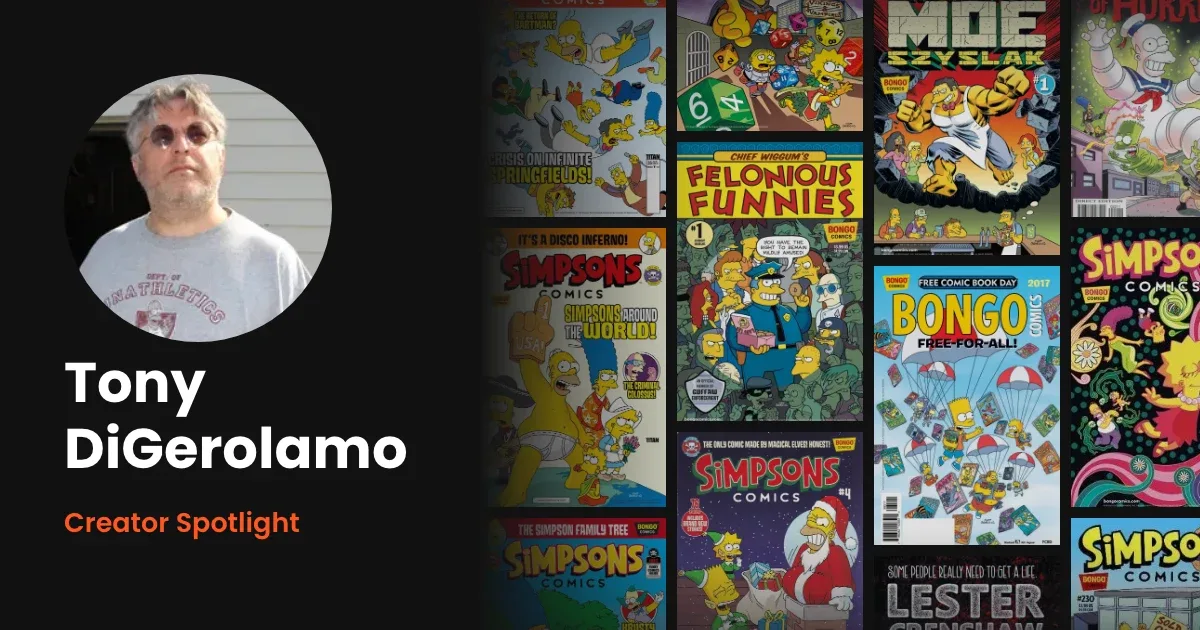
Creator Spotlight: Tony DiGerolamo
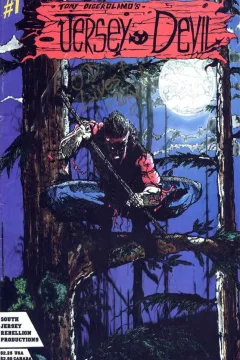
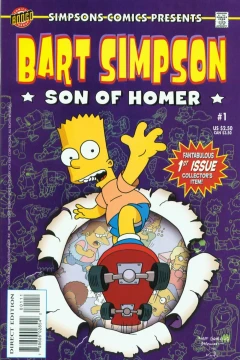
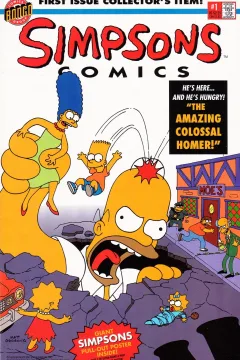
Tony DiGerolamo started making comics in 1992 to make his movies in comic book form, self-publishing Jersey Devil out of South Jersey under his own imprint. He followed it with The Travelers, which he ran for 25 issues, and then landed at Bongo, where he wrote The Simpsons and Bart Simpson comics for the better part of two decades. He's also written The Fix, a story for Image's Outlaw Territory, jokes for Politically Incorrect with Bill Maher, scripts for Space Ghost: Coast to Coast, and tabletop games including Complete Mafia.
These days he's 20 books into The Pineys, a comedy/horror novel series about a South Jersey family who hunt the kin of the Jersey Devil. We caught up with Tony to talk about making movies in comic book form, what each medium demands, how webcomics changed, and what the Pineys are up to next.
For anyone coming to your work for the first time, how would you introduce yourself?
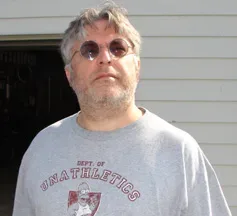
I'm Tony DiGerolamo and I'm the author of The Pineys, a comedy/horror book series about a family of hunters that hunt the kin of the Jersey Devil.
Previously, I worked in comic books. My credits including The Simpsons and Bart Simpson comic books, The Travelers, Jersey Devil, The Fix and I did a story for Image's Outlaw Territory comic book.


Wikipedia has you self-publishing Jersey Devil in 1996 under South Jersey Rebellion Productions. What made you decide to publish it yourself?
It was 1992 (see, you can't trust wiki). I had been writing screenplays and trying to sell them when I heard an interview with Brian Pulido who called comic books the poor man's film medium. I decided to make my movies in comic book form.
How did the Bongo gig come about, and what was it like writing The Simpsons and Bart Simpson?
It was great fun as I was a big fan of the show. At the time, I would've put the comics up against the show even before I was hired. A friend from high school got me an audition. She worked at Bongo.
You've written jokes for Politically Incorrect with Bill Maher and scripts for Space Ghost: Coast to Coast. How did those TV gigs shape you as a writer, and do you think about comedy differently when you're writing for the page versus a screen?
Yeah. Actor delivery is not a factor in print. Some artists can draw very expressive characters and that can sometimes be a substitute. I think it's more important that an artist gets the comedy. If they don't understand the bit or are just punching a clock, it can be problematic to the final page. Comedy is the hardest to do. My editor at the Simpsons would sometimes write a note "CBF" which meant "could be funnier".
When you get gigs like that, the "shaping" of you as a writer has mostly happened. I was already a comedy writer. What got shaped was my checking account for a while. Work-for-hire gigs are just about delivering the goods. If they shape you, they make you focus to get the job done so you get paid. You can't mess around like you can with a personal project.
Does the way you tell a story change across comics, webcomics, screenplays, novels, and tabletop game design?
Comic book scripts are bit tedious since you have to describe every panel and whenever the visuals changed, but I use a screenplay-type format. That streamlines it a little. Action takes up a lot of space and I like action, so that's tough to do a lot of in a comic. I love comedy, which is also tough to do because you don't have the delivery of the actor to rely upon. Most of the gags are visual or require very specific set up. It's very hard to create a "tone" like in a movie or TV show. There's no background music and everything is pretty static. It took me awhile to make the medium my own and understand what changes the flavor and feel of a comic. To manipulate the various levers required to get what you want. It also requires a specific concentration and focus to remember that the artist has to draw things and that the panels can't have a lot of dialogue, depending on the artist.
For webcomics, you have to be brief. Everything must be collapsed into a few panels, so you learn comic book shorthand. Webcomics are usually not a place to tell epic stories unless you're doing a comic page every few days and are doing a fantasy thing.
Screenplays was where I started (maybe short stories before that). Screenplays are dialogue driven and are a plan to make the movie or TV show. They're not meant to be read for fun, they're the blueprints. Description is minimal because so many other people are involved with casting, costuming and directing, you mainly focus on dialogue and plot.
Novels are meant to be read for fun, but since I started in screenplays, I tend to shy away from too much description. In fact, I often write the first draft of the Pineys and go back and add extra description later. Novels are my newest favorite thing to write, mostly because I don't have to rely on other people to get them done. It's a writers' medium, in the others, everyone else gets more credit and fame.
Tabletop games were fun because they are a medium when you can incorporate subtle things from other mediums (movies and TV shows). When I was doing Complete Mafia for d20, I would sometimes base scenarios on famous scenes from mobster movies.
The other advantage is that games are all set up, so you don't have to do the payoff. You don't have to decide if a character lives, dies, gets rich, gets injured or whatever. That's up to the players and GM. I enjoyed coming up with the dice systems, especially the Respect system and Weakness charts in Complete Mafia. The work-for-hire stuff was more difficult because I had to adhere to whatever game I was writing for and there'd be other standards I'd have to adhere to. The worst, however, for me, is creating all the stats. SO tedious.
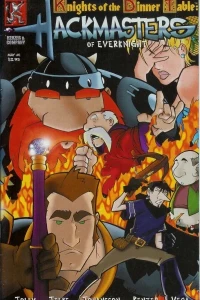
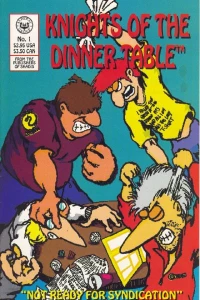
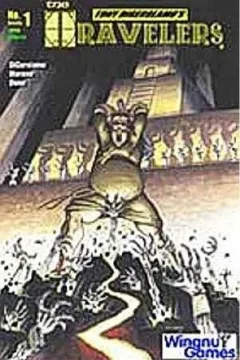
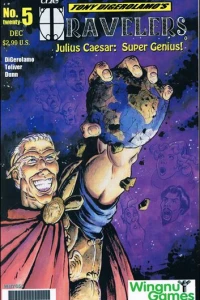
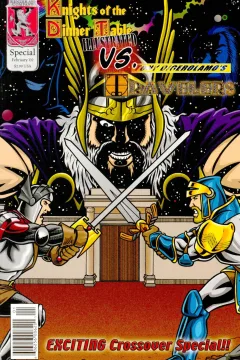
The Travelers ran 25 issues and several art teams. What did you learn about carrying a story through those changes?
Fans hate it when you change art teams. I kept the characters in The Travelers mostly static and they were a lot of fun. If you do one of these progressive storylines where the characters keep evolving and changing, you either need to eventually end it or it just peters out when the comic gets canceled. The biggest thing I learned is that artists will eventually have to leave you, one way or another, unless the comic becomes a powerhouse that supports everyone financially. So if you prepare for the day your artist has to move on, it makes it easier on the transition if you can get another artist, but it doesn't always work out and it can be frustrating, especially when you have fans asking if you'll ever do another issue.
Financially, comic books are really tough now unless you have an amazing artist and a really good crowdfunding plan. Unfortunately, that works best with an artist/writer. We writers get the short shrift in comics unless we also become the publisher, but then you're taking all the financial burden. I loved doing comics, but it wasn't very lucrative. I've always said, "Everyone in comics is looking forward to a career in something else." But like anything in the creative arts, you need a hit to sustain yourself or you go back to your day job and start again.
You co-founded The Webcomic Factory with Christian Beranek. How has the business of webcomics changed since?
Webcomics died when the Internet gamed the algorithm. The model that allowed ads to support comics really isn't sustainable anymore. It's still a good place to start to build an audience. These days, it's most just a hub for all my things, including the webcomics. Business-wise, it's even tougher to make money on webcomics, but it's good exposure.
What are you reading right now purely for fun, comics or otherwise?
Nothing. I can't stomach current-day superhero comics. Like most fans, I'm just waiting for one of the corporations to shut down their comics division and start licensing them out. Once in a while, a fan will give me their comic book. It's often very genuine and heartfelt, but often very derivative.
Mostly what I read now are stories about the Pine Barrens and related research topics to The Pineys. That makes me happy. When you get older, your tastes go in very specific ways and the bar goes up, up up. For me to read a comic and enjoy it, it better be good. I think the last comic book I read was by Mike Baron, one of his crowdfunding deals about a cop. It was good. Baron is always good.
Is there a book, comic, or series that you keep coming back to no matter how many times you've read it?
I liked the old 80s First Comics line, but I don't have time to reread them. Too busy these days.
Is there anything about growing up in South Jersey specifically that shaped what you write about?
Obviously, the Jersey Devil legend, which is what I write about and do talks about. It's unique to our region and has an almost 300 year history. And if you look closely, history is all around you in South Jersey. In fact, since they protected the Pine Barrens and no one can build there anymore, people find abandon towns, buildings, gravesites and other things. It's kind of amazing.
Do you have a local comic shop you're loyal to?
I used to, but not anymore. Many of the shops near me are struggling or closing.
The Pineys is now 20 books deep. How would you pitch it?
The premise is this: Mother Leeds (the mother of the Jersey Devil) was a witch and in the 1730s she opened the portals to Hell and flooded the Pine Barrens with hundreds of devils. This did not go unnoticed by the nearby villagers in Abe's Hat, NJ. They formed a secret hunting society to hunt down the devils and send them back to Hell and their ancestors continue the hunt to this day.
So with this premise (which takes place mostly in the modern day) I can jump around through the history of South Jersey with the characters and the characters' ancestors and tell the stories and history of South Jersey, while also making it funny. It's like Ghostbusters with drunken hillbillies.
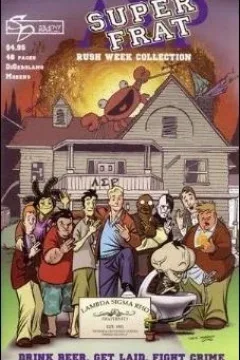
Super Frat has been running as a webcomic for years. What keeps it fun for you?
I just enjoy doing it. I like that the characters have superpowers, but they're really irresponsible with them. I find new ways to cause chaos.
What are you working on right now, and what should readers be watching for?
The Pineys: Book 21 drops in July and takes place in Bordentown, NJ, which has a lot of ghosts and a lot of history. Naturally, the Pineys will be there to cause some trouble.
The Pineys books are available on Amazon, and Super Frat and the rest of his webcomics live at The Webcomic Factory.
Thanks to Tony for the time and the candor.
About the author
I started VerseDB because I wanted a better tool for myself and the comic community.
New Jersey. 550 issues deep and still buying. X-Men 2099, the Ultimate line, The Walking Dead, and any Captain America run I can get. Lately it's DC's Absolute books. A buddy handed me Berserk and said I had no choice, so that's my first manga. He was right.
Start tracking your collection
Track what you own and follow the series you read.
See what other collectors are picking up.