The Supergirl movie is finally here. Released June 26, 2026, the film adapts Tom King and Bilquis Evely's acclaimed 2021-22 miniseries Supergirl: Woman of Tomorrow, one of the best DC comics of the decade. If you loved the movie, the comic will hit even harder. If you loved the comic, you'll want to know exactly what director Craig Gillespie and screenwriter Ana Nogueira changed.
Let's break it all down.
The Source Material: What Makes Woman of Tomorrow Special
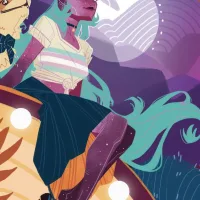
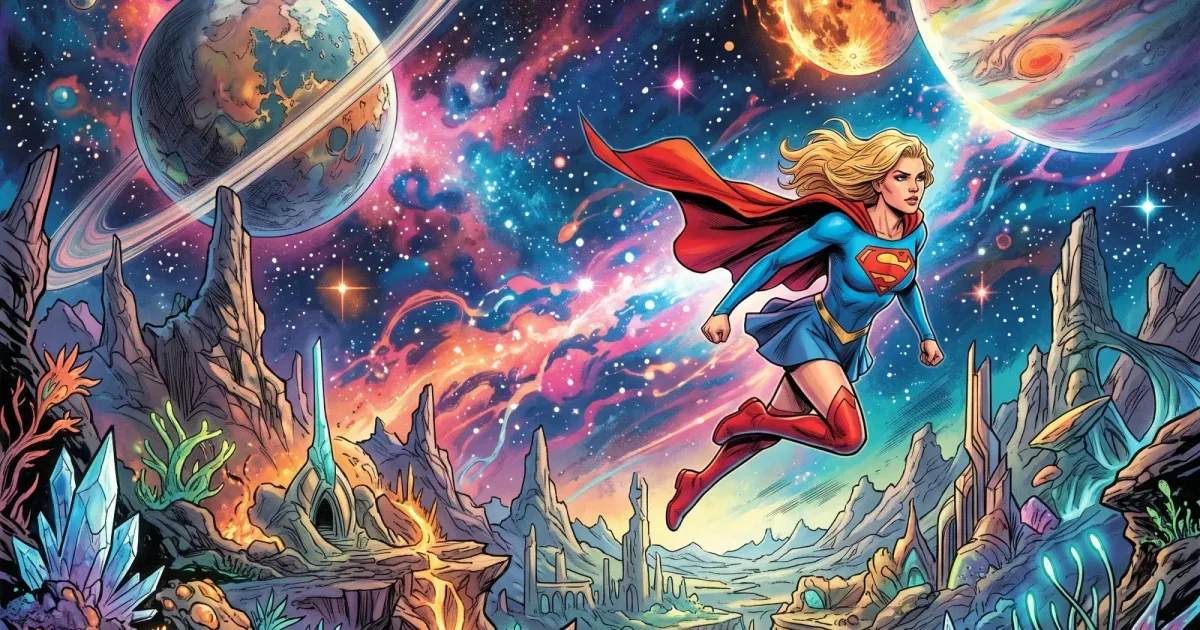
Woman of Tomorrow isn't a typical superhero story. Tom King wrote it as a meditation on grief, identity, and what it means to live in someone else's shadow. Bilquis Evely's artwork, lavishly detailed, with painted alien landscapes that feel genuinely otherworldly, turned it into something that reads more like a sci-fi novel than a cape comic.
The premise is deceptively simple: Kara Zor-El is drifting, purposeless, celebrating her 21st birthday alone on a backwater alien planet. Kal-El grew up on Earth, became Superman, found his people. Kara remembers Krypton. She watched it die. She arrived on Earth to protect a baby cousin who didn't need her, and now everyone she meets sees her through Superman's lens first.
Then a young girl named Ruthye shows up. Her father was murdered by a space pirate named Krem of the Yellow Hills. She wants revenge. She's going to get it with or without Supergirl's help. And so the two of them, plus Krypto, head out across the galaxy.
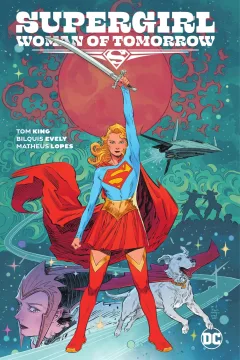
The eight-issue miniseries earned an Eisner Award nomination for Best Limited Series. It's beginner-friendly: you need zero prior Supergirl knowledge to follow it, and by the end you'll understand exactly why Kara matters as a character in a way decades of comics never quite managed to convey.
The Movie's Take
Milly Alcock's Kara is restless, sharp-edged, and clearly chafing under the weight of being Superman's cousin rather than her own person. The film captures the road-trip-across-the-galaxy energy of King's story, and Eve Ridley as Ruthye is a genuine standout, she grounds the whole thing emotionally.
The addition of Jason Momoa as Lobo is the biggest departure from the source material (Lobo doesn't appear in the comic at all), and it injects some chaotic energy into the second act that the miniseries deliberately avoided. Whether that's a feature or a bug depends on what you came for.
Key Differences Between Movie and Comic
Ruthye's motivation runs deeper in the film. In the comic, only Ruthye's father is killed by Krem. In the movie, her entire family is murdered, which amplifies the revenge theme but also simplifies the moral calculus the comic was deliberately complicating.
The narrator shift changes everything. This is the biggest structural change. In the comic, Ruthye narrates, it's her story about Supergirl, told from the outside. In the film, Kara is the center of the narrative. It makes for a more conventional superhero movie but loses the comic's unusual perspective: we saw Supergirl the way a stranger would.
The ending goes a different direction. In Woman of Tomorrow, Kara banishes Krem to the Phantom Zone specifically to stop Ruthye from becoming a killer, the mercy is the point. The film has Kara kill Krem herself. It's a significant thematic reversal that the film's detractors (it sits at 58% on Rotten Tomatoes as of opening weekend) have flagged as undermining what King's story was actually about.
Maypole is gone. The comic includes a stop on a segregated planet called Maypole, a scene that makes the story's themes about institutional evil explicit. It's missing from the film entirely.
Krypto gets a worse time of it. In the comic, Krypto is secretly given an antidote after being poisoned and recovers quickly. The film lingers on his fate considerably longer.
Superman shows up. He doesn't appear in the comic at all, by design. The film includes scenes of Kara's arrival on Earth and her relationship with Kal-El, which helps DCU newcomers but softens the isolation that made the comic's version of Kara so compelling.
What the Movie Gets Right
The film nails the core emotional premise: a young woman who survived a planetary genocide, landed on a planet that already had its hero, and is trying to figure out who she is without Krypton to define her and without Superman's shadow to hide in. Alcock carries that weight convincingly.
It also captures the tonal contrast between Kara's roughness and Ruthye's formal, almost archaic way of speaking, one of the comic's most distinctive pleasures. Gillespie clearly loved the source material even where the script had to compress or reshape it.
Where to Go After the Movie
Whether the film left you wanting more Kara or you want to experience the story as King and Evely told it, here's where to start.
Read the comic first. Seriously, if you haven't, stop here and go read it. It's eight issues, collected in one volume, and it's the definitive version of this story.
Then try the Sterling Gates / Jamal Igle run. This is widely considered Kara's best ongoing series, Gates spent years building her mythology and making her feel distinct from Superman. It begins around issue #34 of the 2005 volume.
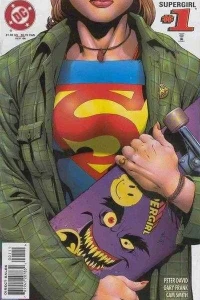
For the New 52 era, Michael Green and Mike Johnson's launch with Mahmud Asrar (the first arc, "Last Daughter of Krypton") is the strongest entry point, capturing a Kara who's angry and disoriented in ways that rhyme with the film's version.
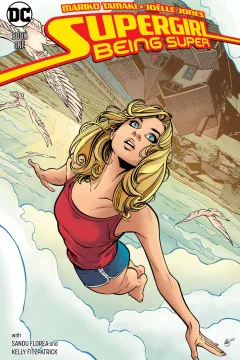
For something completely different, Mariko Tamaki and Joelle Jones' Supergirl: Being Super is an out-of-continuity origin story that strips away all the DC mythology and just tells a quiet, grounded story about a teenager who doesn't know what she is yet.
And for the character deep dive, search VerseDB for Kara Zor-El's full appearance history, she's had more reinventions than almost any character in DC's roster, and tracing them is its own kind of story.

The movie is a worthwhile adaptation even where it diverges. But the comic is the real thing. Now's the perfect time to read it.
You're subscribed!
Thanks for joining our newsletter.
About the author

Started VerseDB because I wanted a better tool for myself and the comic community, something we actually needed but didn't exist yet.
When I'm not working on VerseDB, you'll find me reading and collecting comics. It's my way of unwinding and taking my mind off things, and honestly one of the best hobbies out there.
Get in Touch
Feel free to reach out if you run into any issues or have ideas. Always happy to hear from the community!
Your Comic Collection Awaits
Join thousands of comic enthusiasts tracking their collections,
discovering new series, and connecting with fellow fans.