Digital Comics and Modern Formats
The comic book industry was built on print. For most of its history, the only way to read a comic was to hold one in your hands. That has changed dramatically. Digital platforms, subscription services, vertical-scroll webtoons, crowdfunded publishing, and the global expansion of manga, manhwa, manhua, and European bande dessinee have collectively reshaped how comics are created, distributed, read, and collected. These changes affect what formats exist, how readers access stories, and what collectors need to track.
Section 9 introduced digital distribution as a channel alongside the direct market and newsstand models. This section goes deeper into the platforms themselves, the international formats that have gained global audiences, and the modern publishing models that exist outside traditional distribution entirely. Whether you read on a screen, collect physical volumes from multiple traditions, or both, understanding these formats is essential context for navigating the contemporary comics landscape.
ComiXology and the Rise of Digital Comics
ComiXology is the platform most responsible for bringing digital comics to a mainstream audience. Founded in 2007 by David Steinberger, John D. Roberts, and Peter Jaffe, ComiXology launched initially as a web-based tool for managing pull lists at local comic shops. The company's trajectory changed in 2009 when it released an iPhone app that allowed users to purchase and read digital comics directly on their devices.
The app's defining innovation was Guided View, a reading technology that presented comics panel by panel in full screen, adapting the experience to small smartphone displays. Rather than simply displaying a shrunken page, Guided View mimicked the natural movement of the eye across a printed comic, zooming into each panel sequentially. This made reading comics on a phone not just possible but comfortable, and it attracted readers who had never visited a comic shop.
ComiXology grew rapidly through partnerships with major publishers:
- Marvel, DC, Image, Dark Horse, and most other significant publishers made their catalogs available on the platform
- Same-day digital became standard, with new comics releasing digitally on the same Wednesday as their print editions
- Frequent sales on backlist titles made it easy for new readers to explore entire runs at steep discounts
- ComiXology's Guided View technology was licensed to power the dedicated apps for Marvel, DC, and other publishers
Amazon acquired ComiXology in April 2014. For several years, the platform continued to operate largely as it had, with its own app, storefront, and reading experience. The integration with Amazon's infrastructure was gradual at first.
The disruption came in 2022 and 2023. Amazon began merging ComiXology into its Kindle ecosystem, eliminating the standalone ComiXology app entirely by December 2023. Users' digital libraries were migrated into Kindle, and the dedicated ComiXology reading experience was replaced by the Kindle app's interface. The transition was widely criticized by users who reported a degraded reading experience, the loss of ComiXology's purpose-built navigation, and the quiet removal of the platform's DRM-free download option. Amazon laid off approximately 75% of ComiXology's staff during this period.
The ComiXology brand continues to exist within Amazon's ecosystem, and the ComiXology Unlimited subscription program remains active, but the standalone platform that defined digital comics for over a decade is gone. The story of ComiXology illustrates a broader tension in digital comics: readers who build libraries on a platform are dependent on that platform's continued existence and goodwill. Unlike a physical comic on a shelf, a digital comic exists only as long as the service that sold it to you keeps running.
Subscription Reading Services
While ComiXology operated as a storefront where readers purchased individual comics, another model emerged alongside it: the all-you-can-read subscription service. Two publisher-specific services dominate this space.
Marvel Unlimited launched in 2007 as Marvel's digital subscription platform. For a monthly or annual fee, subscribers gain access to a library of over 30,000 comics spanning Marvel's publishing history. New issues are typically added three months after their print release, creating a delayed but comprehensive backlist. Marvel Unlimited is available in most regions worldwide and offers both a standard tier and a Plus tier that includes physical merchandise. For readers who want to explore decades of Marvel continuity without buying individual issues or collected editions, it is the most cost-effective option available.
DC Universe Infinite is DC's equivalent service, offering a library of over 32,000 DC comics, graphic novels, and titles from imprints like Vertigo and Black Label. DC Universe Infinite launched in 2021 as a comics-only evolution of the earlier DC Universe service (which had also included streaming video content before that function moved to HBO Max). The platform offers a standard tier and an Ultra tier. Ultra subscribers can read new comics as early as 30 days after their print release, significantly closer to the publication date than Marvel Unlimited's three-month window.
These subscription services have changed reading habits for a significant portion of the comic audience:
- Backlist exploration becomes frictionless. A reader curious about Chris Claremont's Uncanny X-Men run can start reading immediately rather than hunting for trades or back issues
- New reader onboarding is simplified. Instead of figuring out which trade to buy first, a subscriber can search for a character or series and start reading from any starting point
- Financial accessibility improves. A single month's subscription costs less than two individual comics at cover price, while granting access to thousands of titles
- Reading does not equal collecting. Subscription services are purely for reading. They do not replace physical collecting, and the comics accessed through them have no secondary market value
For collectors, these services complement rather than replace a physical collection. You might use Marvel Unlimited to read through a run before deciding which key issues to hunt for in print. The reading experience and the collecting experience serve different purposes.
Webtoons and Vertical-Scroll Comics
The most significant new comic format to emerge in the 21st century did not come from American publishers or Japanese manga houses. It came from South Korea.
Webtoons are digital comics designed to be read by scrolling vertically on a smartphone or computer screen. Unlike traditional comics, which are formatted as discrete pages meant to be turned (whether physically or digitally), webtoons present a continuous vertical strip of panels that the reader scrolls through from top to bottom. The format was pioneered in South Korea in the early 2000s, with the first vertical-scroll webtoon, Love Story by Kang Full, appearing on the Daum web portal in 2003. Naver launched its own webtoon service in 2004, and by the mid-2000s, webtoons had become the dominant form of comics in South Korea.
The format's characteristics are distinct from both Western comics and traditional manga:
- Vertical scrolling replaces page turns, creating a continuous reading flow optimized for mobile devices
- Full color is standard. Unlike manga's predominantly black-and-white tradition, webtoons are almost always in color
- Episode-based serialization delivers short chapters (often called episodes) on a regular schedule, frequently weekly
- Free-to-read models with ad support or premium paid episodes are the norm, rather than the upfront purchase model of print comics
- Creator-driven publishing allows individual artists to serialize their work directly on a platform without a traditional publisher
The global expansion of webtoons accelerated in 2014 when Naver launched LINE Webtoon (now simply WEBTOON) as an international platform. The app has grown to over 85 million monthly active readers across more than 100 countries, with over 830,000 creators publishing on the platform. Competing platforms include Tapas, Lezhin Comics, and Tappytoon, among others.
Webtoons have also begun crossing over into print. Popular webtoon series are increasingly collected into physical volumes for bookstore and comic shop distribution, reversing the traditional pipeline where print comics are later digitized. The influence flows in the other direction as well: both Marvel and DC have experimented with vertical-scroll digital-first content, and in late 2025, the two publishers announced digital-exclusive crossover webcomics using the vertical-scroll format.
For databases and collectors, webtoons present a classification challenge. A webtoon that originates as a Korean digital-first series and is later collected into English-language print volumes needs to be tracked by its medium (manhwa), its format (digital-first, later collected), and its publication history across platforms and languages. VerseDB classifies Korean comics as manhwa regardless of whether they originated in print or as digital webtoons, since the medium designation describes the comic tradition rather than the delivery method.
Print-on-Demand and Crowdfunded Comics

Not all modern comics pass through traditional publishers or distributors. Over the past decade, crowdfunding platforms and direct-to-consumer publishing have created an alternative pipeline that bypasses the direct market entirely.
Kickstarter has become the most prominent crowdfunding platform for comics. As of 2024, comics have the highest success rate of any Kickstarter category at over 67%. Creators use the platform to fund production costs (art, printing, shipping) by pre-selling copies directly to backers before the book is printed. This model inverts the traditional publishing sequence: instead of a publisher financing production and hoping the market responds, the creator gauges demand first and prints only what has been paid for.
Crowdfunded comics span the full spectrum of the medium:
- Independent creators use Kickstarter to publish work that traditional publishers might not take on, reaching niche audiences directly
- Established professionals fund passion projects outside their work-for-hire obligations, retaining full ownership of the material
- Webcomic creators like Ngozi Ukazu (Check, Please!) build audiences online and then crowdfund print collections, converting free digital readership into physical book sales
- Publishers occasionally use crowdfunding for premium editions, oversized formats, or projects with uncertain commercial viability
Print-on-demand (POD) technology complements crowdfunding by eliminating the need for large upfront print runs. A creator can make a book available for individual printing and shipping as orders come in, with no unsold inventory. While POD quality has historically lagged behind offset printing, modern POD services produce results that are increasingly competitive for standard trade paperback formats.
The rise of direct-to-consumer publishing means that a growing number of comics exist outside the traditional distribution channels tracked by Diamond, Lunar, or bookstore distributors. These titles may not appear in Previews catalogs or on comic shop shelves, but they are real publications with real readers and, in some cases, significant sales numbers. For collectors, crowdfunded editions are often produced in limited quantities with exclusive covers or formats that make them distinct collectibles. Tracking these publications requires databases that can catalog titles from any source, not just those that pass through major distribution.
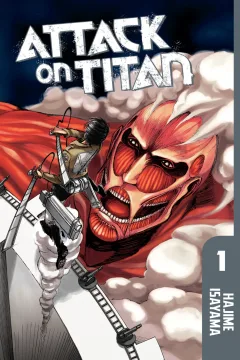
Manga Formats Explained
Manga, the Japanese comic tradition, follows publishing conventions that differ significantly from American comics. Understanding these formats is essential for anyone collecting or reading manga in either Japanese or English-language editions.
The standard manga publishing pipeline begins with serialization in an anthology magazine. Weekly and monthly magazines like Weekly Shonen Jump, Monthly Afternoon, and Shojo Beat publish chapters from dozens of series simultaneously. Each magazine issue contains 15 to 30 pages of a given series alongside chapters from many other titles. These magazines are printed on inexpensive newsprint, are not intended for long-term keeping, and are typically discarded after reading.
After serialization, chapters are collected into bound volumes. This is where the format terminology becomes important:
- Tankobon is the standard collected volume format. Tankobon are digest-sized (roughly 13 cm x 18 cm), typically contain 180 to 220 pages collecting 8 to 12 serialized chapters, and are the most common format for manga both in Japan and in English-language translation. When someone says they "bought Volume 3 of One Piece," they are referring to a tankobon
- Bunkoban is a smaller, novel-sized format (approximately A6, or 10.5 cm x 14.8 cm) printed on higher-quality paper. Bunkoban volumes are thicker than tankobon because they contain more pages per volume, meaning a series collected in bunkoban format will have fewer total volumes than the same series in tankobon. Bunkoban editions are typically released years after the original tankobon run and target readers who want a more compact library edition
- Kanzenban ("complete edition") is a larger format (approximately A5, or 14.8 cm x 21 cm) that restores content often omitted from standard tankobon, including original color pages, chapter title pages, and bonus material from the magazine serialization. Kanzenban editions emphasize completeness and are produced for popular series with dedicated fanbases
- Aizouban ("cherished edition") is a premium collector's format featuring special covers, higher-quality paper, and sometimes slipcases or other deluxe packaging. Aizouban editions are produced in limited quantities and priced accordingly
In the English-language market, additional format terms apply:
- Omnibus editions collect multiple tankobon volumes into a single thicker book, often three volumes in one, at a lower per-volume price. Viz Media, Kodansha, and other English-language manga publishers use omnibus editions to make long-running series more accessible
- Deluxe editions and hardcover editions are premium English-language releases that may feature larger trim sizes, improved paper, and bonus content not included in the standard English tankobon
Manga is read right to left in its original Japanese format. English-language editions preserve this reading direction, meaning the book opens from what a Western reader would consider the "back" cover. Page layouts, panel flow, and speech bubble placement all follow right-to-left conventions. Some early English translations in the 1990s and 2000s were "flipped" to read left to right, but this practice has been almost entirely abandoned in favor of preserving the original reading direction.
VerseDB classifies manga series with the manga medium type. Series designated as manga display "Volumes" rather than "Issues" throughout the platform's interface, reflecting the format conventions of the medium. A manga series page on VerseDB shows its volume count, publisher (both the original Japanese publisher and the English-language licensor, where applicable), and the same metadata fields available for any other series type.
Manhwa and Manhua
Manhwa (Korean comics) and manhua (Chinese comics) are distinct comic traditions with their own histories, formats, and publishing conventions. While all three East Asian traditions (manga, manhwa, manhua) share visual and narrative influences, they differ in reading direction, format, and distribution model.
Manhwa (Korean Comics)
Korean comics have a publishing history dating back to the early 20th century, with the first Korean comic strip appearing in 1909. The modern manhwa industry developed through decades of government regulation and censorship before finding its footing in the 1980s and 1990s. Print manhwa was traditionally published in magazines and collected into book volumes, similar to the Japanese model but read left to right rather than right to left.
The Asian Financial Crisis of 1997 devastated the Korean economy and, with it, the print manhwa industry. Comic rental shops, which had been a primary distribution channel, declined sharply. In the early 2000s, Korean comics migrated to the internet, and the webtoon format described earlier in this section became the dominant form of Korean comics. Today, the overwhelming majority of new Korean comics are published digitally as webtoons. Print manhwa still exists, but the industry's center of gravity has shifted almost entirely to digital-first publication.
For collectors, this means Korean comics occupy a unique position in the market. Older print manhwa from the pre-digital era follows traditional collected-volume conventions. Modern manhwa, originating as digital webtoons, may or may not receive print editions. When print editions are produced (often for international markets), they are typically formatted as standard trade-sized volumes read left to right.
Manhua (Chinese Comics)
Chinese comics, or manhua, have roots stretching back centuries through traditions of illustrated storytelling, but modern manhua as a publishing form emerged in the late 19th and early 20th centuries. The medium experienced significant government regulation following the establishment of the People's Republic of China in 1949, which shaped both the content and distribution of Chinese comics for decades.
Contemporary manhua is largely digital. Platforms like Bilibili Comics, Kuaikan, and MangaToon host vast catalogs of Chinese webcomics, many formatted for vertical scrolling in a manner similar to Korean webtoons. Manhua is typically read left to right (following Chinese reading conventions for modern text) and is often published in full color. The medium draws from both Japanese manga and European comic influences, resulting in a wide range of visual styles.
Chinese manhua has gained international readership primarily through digital platforms that offer official English translations. Print collections of popular manhua series are increasingly available in English-language markets, following the same pattern of digital-to-print crossover seen with Korean webtoons.
How VerseDB Tracks Manhwa and Manhua
VerseDB maintains separate medium classifications for manhwa and manhua, recognizing them as distinct traditions rather than grouping all Asian comics together. A Korean series is classified as manhwa and a Chinese series as manhua, each with its own medium designation in the database. Both use "Volumes" rather than "Issues" in the platform's interface, reflecting their collected-volume publishing conventions.
Users can customize which mediums they see by default through the Content Preferences section in their profile settings. By default, VerseDB filters search and browse results to Western comics, but users who read manhwa, manhua, or any other medium can enable those types in their preferences. Once enabled, those mediums appear alongside Western comics in search results, browse views, and new series discovery. Users who read across multiple traditions can enable all of them, while users who focus exclusively on one medium can keep their experience filtered to exactly what they collect. This preference-based approach means the platform serves dedicated manga readers, manhwa fans, and Western comic collectors equally without forcing any group to wade through content outside their interest.
Bande Dessinee and European Comics
Bande dessinee (literally "drawn strip," commonly abbreviated BD) is the Franco-Belgian comic tradition, one of the oldest and most artistically accomplished sequential art traditions in the world. While American and Japanese comics dominate the global market by volume, European comics, particularly those from France and Belgium, represent a distinct publishing culture with its own formats, conventions, and reader expectations.
The defining format of bande dessinee is the album. Unlike American single issues (20 to 32 pages, staple-bound, released monthly) or Japanese tankobon (digest-sized paperback collections of serialized chapters), the European album is a large-format hardcover volume, typically A4-sized (approximately 21 cm x 30 cm), containing 46 to 62 pages of fully colored artwork. Albums are self-contained or part of a numbered series, and a new album in a series may be released annually rather than monthly.
Key characteristics of the bande dessinee tradition include:
- The album as the primary unit of publication. While some BD series are serialized in magazines before album collection (a practice with roots in publications like Spirou and Tintin magazine), the album itself is the format readers buy and keep. The album is not a "collected edition" in the American sense; it is the definitive format
- Hardcover as the default. French-language editions are almost always hardcover. Softcover editions exist but are secondary to the hardcover album
- Full color throughout. Unlike manga's black-and-white standard, BD albums are colored from cover to cover, with color treated as an integral part of the artwork rather than an afterthought
- Annual or less-than-annual release schedules. A single album may take one to three years to produce. Readers of BD series are accustomed to waiting, and the expectation is that each album will be a polished, complete work rather than a quickly produced installment
The tradition's most famous series illustrate its range: Tintin by Herge, Asterix by Goscinny and Uderzo, Lucky Luke by Morris and Goscinny, Blueberry by Charlier and Giraud (Moebius), and Blacksad by Diaz Canales and Guarnido. More recent works like Persepolis by Marjane Satrapi (originally published in French) and The Incal by Jodorowsky and Moebius have brought BD to wider international audiences.
European comics extend beyond the Franco-Belgian tradition. Italian fumetti, British comics (from 2000 AD to the graphic novels of the British Invasion writers), Spanish comics, and Scandinavian comics all have their own histories. However, the Franco-Belgian album format is the most widely recognized European convention and the one most frequently encountered by international readers.
VerseDB classifies Franco-Belgian and other French-language comics under the bande_dessinee medium type, displayed as "Bande Dessinee" in the interface. As with manga, manhwa, and manhua, series classified as bande dessinee use "Volumes" rather than "Issues" to reflect the album-based publishing model. This distinction ensures that a Blacksad album and a Batman single issue are tracked according to the conventions of their respective traditions, even though both are comics in the broadest sense.
How VerseDB Supports All Mediums and Formats
VerseDB is primarily a Western comic book database, and its default search and browse filters reflect that focus. When you search for a series or browse the catalog, the default medium filter is set to comic (Western comics). This keeps the primary experience focused on the tradition that most of the platform's users are collecting and reading.
However, the platform fully supports all five comic traditions as distinct medium types: comic, manga, manhwa, manhua, and bande dessinee. Users can switch the medium filter at any time to browse series from any tradition, or remove the filter entirely to see everything in the database. Each medium type carries its own conventions in the interface:
- Series classified as comic display "Issues" (e.g., "52 Issues")
- Series classified as manga, manhwa, manhua, or bande dessinee display "Volumes" (e.g., "37 Volumes")
- Every series carries a medium field and a medium_source field that records whether the classification was auto-detected during data import or manually set by a contributor
This medium-aware design means the platform adapts its terminology and organization to match the publishing conventions of whatever you are collecting. A collector tracking both The Amazing Spider-Man (comic, issues) and Berserk (manga, volumes) sees each series presented according to its own tradition, not forced into a one-size-fits-all framework.
Beyond medium type, VerseDB tracks series across all physical and publication formats: single issues, trade paperbacks, hardcovers, omnibuses, digests, prestige format, graphic novels, and more. Whether you collect American floppies, Japanese tankobon, Korean webtoon print editions, or Franco-Belgian albums, the platform provides the metadata structure to catalog what you own with the specificity each format demands.
Frequently Asked Questions
What Is the Difference Between a Comic and a Graphic Novel?
A comic book is a serialized periodical, typically 20 to 32 pages, staple-bound, and released on a regular schedule. A graphic novel is a long-form comic published as a self-contained bound volume, either hardcover or softcover. The interior medium is the same: sequential art combined with text to tell a story. The difference is format and publication approach, not quality or genre.
In practice, most books sold as "graphic novels" are actually collected editions of previously serialized single issues. An original graphic novel (OGN) is written and published as a complete work from the start, with no prior serialization. Books like Maus by Art Spiegelman and Blankets by Craig Thompson are OGNs in the strictest sense. A trade paperback collecting six issues of Saga is a collected edition, even if a bookstore shelves it in the "graphic novels" section. The distinction is covered in detail in Section 1 under "Are Graphic Novels the Same as Comics?"
Why Are Comics Numbered the Way They Are?
Comic book numbering is confusing because publishers periodically restart their titles with a new Issue #1. When a series like The Amazing Spider-Man is cancelled or concluded and then relaunched, the new run begins at #1, and the original becomes Volume 1 while the relaunch becomes Volume 2. A single character can accumulate five or more volumes over a few decades, each with its own numbering sequence. Publishers do this because first issues consistently outsell other issue numbers, attracting new readers and generating a sales bump.
To complicate things further, publishers sometimes revert to legacy numbering for milestone issues. A title that has been relaunched three times may only be at Issue #25 in its current volume, but if the cumulative total across all volumes reaches #700, the publisher may switch to that number for a special anniversary. Action Comics did exactly this when it reached legacy Issue #1000 in 2018. Section 3 covers volumes, relaunches, and legacy numbering in full detail.
Are Comic Books Worth Money?
Some are. Most are not. The vast majority of comics published in any given month will hold their cover price or less on the secondary market. What makes a comic valuable is a combination of three factors: significance (what happens in the issue), condition (how well-preserved the physical copy is), and scarcity (how many copies survive in collectible condition).
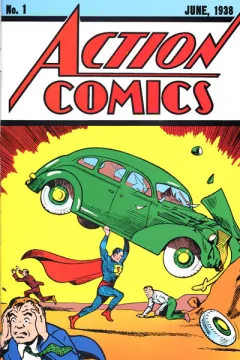
Key issues, particularly first appearances of popular characters, are where the real value concentrates. Action Comics #1, Amazing Fantasy #15, and Incredible Hulk #181 command high prices because they contain unrepeatable milestones in characters that remain culturally relevant. But significance alone is not enough. A first appearance in Poor condition sells for a fraction of the same issue in Near Mint. Professional grading by companies like CGC or CBCS provides a verified condition assessment that directly affects market price. Section 10 covers grading, key issues, and collecting strategies in depth.
If you are collecting primarily as an investment, know that the market is unpredictable. Media adaptations can spike demand for an obscure first appearance overnight, and that same demand can cool just as quickly. Collecting what you enjoy reading is a more reliable source of satisfaction than speculating on future value.
How Do I Start Collecting Comics?
Start with what interests you, not with what someone tells you is valuable. Pick a character, genre, or creator that appeals to you and find a series that serves as a natural entry point. Limited series and new #1 issues are designed to be accessible without prior reading. Trade paperbacks collect full story arcs in a single volume, which makes them ideal for catching up on a series without hunting for individual back issues.
Visit a local comic shop if you have one nearby. Tell the staff what kinds of stories you enjoy (horror, sci-fi, crime, superheroes, slice of life) and ask for recommendations. Comic shop employees are generally enthusiastic about helping new readers find their footing. If you want to follow new releases as they come out, set up a pull list at your shop so copies of your chosen series are reserved for you each week.
On VerseDB, you can browse series by publisher, genre, or medium to discover titles that match your interests. The platform's weekly releases view shows what is coming out each Wednesday, and the pull list feature lets you track upcoming issues for every series you follow. Starting a digital collection log early, even if it is just a handful of books, makes it easy to keep track of what you own and what you want to read next.
What Is the Best Way to Store Comic Books?
For single issues, the standard preservation method is bags and boards. Place each comic in a clear polypropylene or Mylar bag with an acid-free backing board behind it. The bag protects the cover from surface contact, dust, and moisture, while the board prevents bending and provides structural support. Bag-and-board sets are inexpensive and available at any comic shop or online retailer.
Store bagged-and-boarded comics upright in comic storage boxes (short boxes or long boxes). Keep the boxes in a cool, dry environment away from direct sunlight. Heat, humidity, and UV light are the three biggest threats to paper preservation. A climate-controlled room or closet is ideal. Attics, garages, and basements are risky unless you can control temperature and moisture consistently.
For higher-value books, consider acid-free Mylar sleeves (such as E. Gerber Mylites) instead of standard polypropylene bags. Mylar does not degrade over time the way polypropylene can, making it the preferred choice for long-term archival storage. And if a comic is valuable enough to warrant professional grading, the sealed slab itself provides the highest level of physical protection available.
What Makes a Comic Book Valuable?
Three factors drive comic book value: significance, condition, and scarcity. A comic needs at least two of these working in its favor to command a meaningful premium over cover price.
Significance means the issue contains something the market considers important. First appearances of popular characters are the most common driver. The first appearance of Wolverine, Venom, or Miles Morales will always be in demand because those characters have enduring cultural relevance. Deaths, origin stories, first issues of landmark series, and milestone numbers also contribute to significance. However, significance is not permanent. A character who appears in a blockbuster film can turn a previously obscure comic into a key overnight, and a character who fades from relevance can see their first appearance decline in demand.
Condition is assessed on a 0.5 to 10.0 scale by professional grading companies. The difference between a 9.8 and a 6.0 on a high-demand key can be tens of thousands of dollars. Scarcity depends on print run, survival rate, and era. Golden Age comics are scarce because most copies were discarded decades ago. A modern comic printed in quantities of 200,000 copies is not scarce regardless of what happens in the story. Section 10 covers grading, key issues, and the factors that determine value in full detail.
What Is New Comic Book Day?
New Comic Book Day is Wednesday. Every week, comic book shops across the United States receive their shipments from distributors and stock new releases on the shelves. Wednesday is the day new single issues, collected editions, and variant covers become available for purchase.
It was not always Wednesday. When the direct market started in the late 1970s, new comics arrived on Fridays. The release day shifted to Thursday in the early 1980s and then to Wednesday by 1988, where it has remained ever since (with a brief exception when DC moved to Tuesday from 2020 to 2024 before returning to Wednesday). The Wednesday convention stuck because it gives shops time to receive and organize Tuesday shipments before opening with a full display the next morning.
This weekly rhythm is one of the defining rituals of the hobby. Readers and collectors visit their shops on Wednesday (or shortly after) to pick up their pull list, browse new arrivals, and discuss the week's releases. The release date tracked on every issue in the VerseDB database corresponds to this Wednesday street date, and the platform's weekly releases view organizes upcoming comics by their release week so you can see exactly what is coming out. Section 9 covers New Comic Book Day, pull lists, and the distribution system in full detail.
What Is the Difference Between Marvel and DC?
Marvel and DC are the two largest American comic book publishers, and together they account for the majority of monthly superhero comic sales. Both maintain vast shared universes of interconnected characters, but their editorial philosophies and storytelling traditions differ in ways that shape the reading experience.
Marvel built its identity on flawed, relatable heroes. When Stan Lee, Jack Kirby, and Steve Ditko created Spider-Man, the X-Men, and the Fantastic Four in the 1960s, they gave their characters personal problems, self-doubt, and mundane struggles alongside their superhero lives. Peter Parker worries about rent. The X-Men face prejudice as much as supervillains. Marvel's characters tend to exist in a world that looks like ours, set in real cities like New York.
DC is built around legacy and iconography. Superman, Batman, and Wonder Woman are archetypes as much as they are characters, and many of DC's major identities (The Flash, Green Lantern, Robin) have been carried by multiple people across different eras. DC has also been more willing to reset its continuity through universe-wide events like Crisis on Infinite Earths and Flashpoint, creating distinct publishing eras that collectors track separately. Both publishers are covered in depth in Section 6.
Beyond Marvel and DC, the comic book industry includes major independent publishers like Image, Dark Horse, BOOM! Studios, and IDW, as well as literary presses like Fantagraphics and Drawn & Quarterly. The medium is far broader than two companies, but Marvel and DC remain the entry point for most American readers.
You're subscribed!
Thanks for joining our newsletter.
About the author

Hey, I'm Michael! As the creator and developer behind VerseDB, I get to combine my love for building great software with a serious comic book habit. While I definitely enjoy the thrill of collecting, I'm ultimately in it for the stories they tell. For me, it's all about getting lost in a great narrative and appreciating the artwork. I'm a massive fan of hunting down and showcasing beautiful covers. I built this platform to give readers and collectors a clean, organized place to catalog the issues, runs, and art that mean the most to them. Take a look around, log your favorites, and welcome to the community!
Your Comic Collection Awaits
Join thousands of comic enthusiasts tracking their collections,
discovering new series, and connecting with fellow fans.