Comic Book Eras Explained
Comic book history is organized into a series of broadly recognized eras, often called "ages," that reflect shifts in storytelling, business practices, cultural influence, and audience expectations. These eras are not official designations with hard start and end dates. They are informal classifications developed by historians, collectors, and fans to describe distinct periods in the medium's evolution. Different sources place the boundaries in slightly different years, and some recognize additional transitional periods between the major ages.
Understanding which era a comic belongs to provides essential context for collecting and evaluation. A comic's era affects its rarity, production quality, paper stock, color reproduction, storytelling conventions, and market value. Two issues with the same character and similar cover prices can be fundamentally different collectibles if one is a Golden Age original and the other is a Modern Age reprint. For collectors cataloging their libraries on a platform like VerseDB, where every issue carries both a cover date and a release date, these dates are the primary data points that place a comic within its historical era.
Below is a breakdown of the major eras of American comic book publishing, including key events, defining titles, and the cultural forces that shaped each period.
The Golden Age (1938 to 1956)
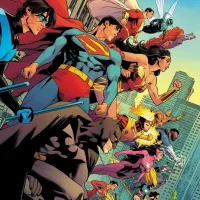
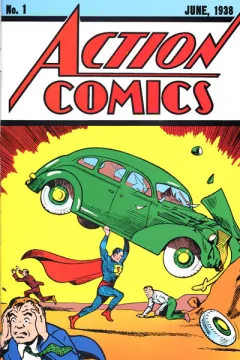
The Golden Age of comics began with the publication of Action Comics #1 in June 1938, which introduced Superman to the world. Created by Jerry Siegel and Joe Shuster, Superman was the first costumed superhero in the modern sense, and his immediate commercial success triggered a wave of imitation and innovation that defined the American comic book industry for the next two decades. Before Superman, comic books existed primarily as reprints of newspaper strips. After Superman, they became a distinct entertainment medium with their own original characters, genres, and audience.
The Golden Age is defined by the birth and explosive growth of the superhero genre, the influence of World War II on content and readership, the postwar decline of superheroes, and the industry-wide disruption caused by the Comics Code Authority.
Key events and titles of the Golden Age include:
- Superman debuted in Action Comics #1 (1938), establishing the superhero archetype: a costumed figure with extraordinary abilities, a secret identity, and a mission to protect the innocent
- Batman first appeared in Detective Comics #27 (1939), created by Bob Kane and Bill Finger, offering a darker, detective-driven counterpart to Superman
- Wonder Woman debuted in All-Star Comics #8 (1941), created by William Moulton Marston, becoming the most prominent female superhero of the era
- Captain America appeared in Captain America Comics #1 (1941), created by Joe Simon and Jack Kirby, with a debut cover showing the character punching Adolf Hitler
- EC Comics published horror, crime, and science fiction titles like Tales from the Crypt, The Vault of Horror, and Weird Science in the early 1950s, producing some of the most artistically accomplished and controversial comics of the era
The wartime years were a commercial peak. Comics were cheap, portable, and disposable entertainment, and publishers shipped millions of copies to military bases overseas. Superheroes fought the Axis powers on covers and in stories, aligning the genre with patriotic sentiment. After the war ended, superhero sales declined and publishers pivoted to other genres: romance, crime, horror, western, humor, and science fiction all flourished in the late 1940s and early 1950s.
The Golden Age ended not with a creative shift but with a political one. In 1954, psychiatrist Fredric Wertham published Seduction of the Innocent, a book arguing that comic books caused juvenile delinquency. His claims prompted U.S. Senate hearings and intense public pressure on the industry. In response, publishers established the Comics Code Authority (CCA) in 1954, a self-censorship body whose restrictive guidelines effectively banned horror, crime, and any content deemed objectionable. EC Comics, whose horror and crime titles were the primary targets, was forced to cancel nearly its entire line. The CCA's restrictions narrowed the creative range of mainstream comics for decades and contributed to the decline that preceded the Silver Age revival.
Golden Age comics are among the most valuable and sought-after collectibles in the hobby. Their age, low survival rates (many were discarded, recycled in wartime paper drives, or damaged by decades of storage), and historical significance make surviving copies extremely scarce, particularly in high grades.
The Silver Age (1956 to 1970)
The Silver Age began with Showcase #4 in 1956, which introduced a new version of the Flash. Developed under editor Julius Schwartz, with a script by Robert Kanigher and art by Carmine Infantino, the new Flash replaced the Golden Age original with a fresh character, new costume, and a science-fiction origin. DC's decision to revive the Flash with a modern, science-fiction-inflected origin signaled that superheroes were commercially viable again after the postwar slump. The success of Showcase #4 led DC to revamp other Golden Age characters, including Green Lantern, Hawkman, and the Atom, and to assemble them into a new team, the Justice League of America.
The Silver Age is characterized by the revival and reinvention of superheroes, the infusion of science fiction concepts into superhero stories, the creation of the Marvel Universe, and the establishment of shared continuity as a publishing strategy.
Key events and titles of the Silver Age include:
- The Flash returned in Showcase #4 (1956), marking the conventional start of the era
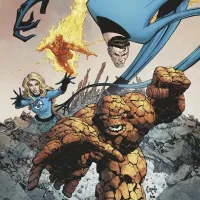
- The Fantastic Four debuted in Fantastic Four #1 (1961), created by Stan Lee and Jack Kirby, launching the Marvel Age of Comics with flawed, emotionally complex heroes who argued, struggled financially, and dealt with personal problems alongside cosmic threats
- Spider-Man first appeared in Amazing Fantasy #15 (1962), created by Stan Lee and Steve Ditko, establishing the template for the relatable, everyman superhero
- The X-Men debuted in X-Men #1 (1963), introducing a team of mutant outcasts whose stories would eventually become allegories for prejudice and civil rights
- The Justice League of America, the Avengers, Iron Man, Thor, Doctor Strange, and Daredevil all debuted during this period, building out the shared universes that define Marvel and DC to this day
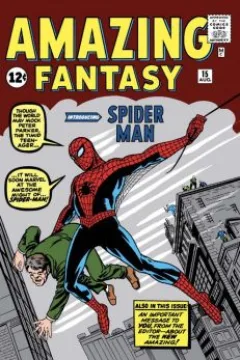
Marvel's approach under Stan Lee, Jack Kirby, and Steve Ditko fundamentally changed superhero storytelling. Where DC's Silver Age heroes were often idealized and square-jawed, Marvel's characters were anxious, temperamental, and self-doubting. Peter Parker worried about paying rent. The Thing resented his monstrous appearance. The Hulk was feared by the people he tried to protect. This emphasis on character psychology and interpersonal drama attracted older readers and helped comics mature beyond their reputation as children's entertainment.
The Silver Age also saw the rise of the Marvel Method of collaboration, where Lee provided plot outlines and artists like Kirby and Ditko handled full visual storytelling before Lee added dialogue. This method gave artists enormous creative latitude and produced some of the most dynamic visual storytelling in the medium's history, though it also created lasting disputes over proper creative credit.
For collectors, Silver Age comics represent a sweet spot of historical significance and relative accessibility. While key issues like Amazing Fantasy #15 and Fantastic Four #1 command six- and seven-figure prices in high grades, many Silver Age books remain affordable in lower conditions. The era's cover dates, tracked on platforms like VerseDB alongside release dates, are essential for identifying first printings and placing issues within their correct publishing context.

The Bronze Age (1970 to 1985)
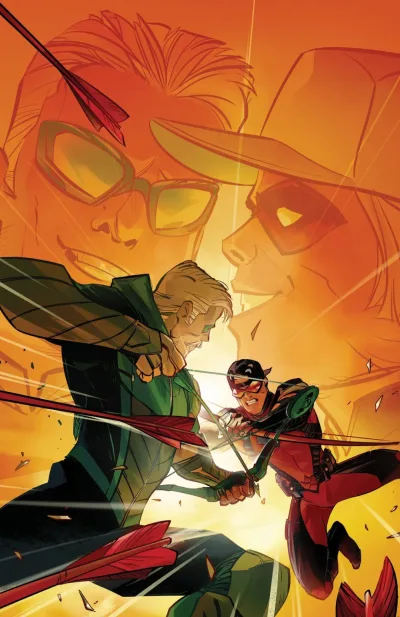
The Bronze Age is generally dated from 1970, when a combination of creative, editorial, and cultural shifts moved mainstream comics toward more mature and socially conscious storytelling. The era's beginning is sometimes pinpointed to specific events: Jack Kirby's departure from Marvel to DC in 1970, the relaxation of the Comics Code Authority in 1971, or the debut of the socially charged Green Lantern/Green Arrow series by Dennis O'Neil and Neal Adams in 1970.
The Bronze Age is defined by the introduction of real-world social issues into superhero narratives, darker and more consequential storytelling, the loosening of the Comics Code, the rise of the direct market distribution model, and the emergence of independent publishers.
Key events and titles of the Bronze Age include:
- Green Lantern/Green Arrow #76 (1970) by Dennis O'Neil and Neal Adams confronted racism, poverty, and drug addiction head-on, with issues #85 and #86 (1971) depicting Green Arrow's sidekick Speedy as a heroin addict
- The Amazing Spider-Man #96 to #98 (1971) published a three-part story about drug abuse without Comics Code approval, after the U.S. Department of Health, Education, and Welfare asked Stan Lee to address the issue. The positive reception led the CCA to revise its guidelines for the first time
- The Amazing Spider-Man #121 to #122 (1973) killed Gwen Stacy, one of the most significant supporting characters in Marvel's line, in a story that demonstrated major characters could die permanently and that superhero stories could have irreversible consequences
- Giant-Size X-Men #1 (1975) introduced a new international roster including Storm, Colossus, Nightcrawler, and Wolverine, relaunching the X-Men as Marvel's most popular franchise
- A Contract with God by Will Eisner (1978) is widely credited as one of the first works to use the term "graphic novel," demonstrating that comics could be a vehicle for literary, adult storytelling outside the superhero genre
The Bronze Age also witnessed structural changes to the comic book business that shaped the industry for decades. The direct market emerged in the mid-1970s, when specialty comic shops began ordering comics on a non-returnable basis directly from distributors, rather than through the returnable newsstand system. This new distribution channel gave publishers more predictable sales data and allowed niche titles to survive with smaller but dedicated audiences. By the early 1980s, the direct market was the primary sales channel for comic books, and the shift from newsstand to direct edition would create the variant distinctions that collectors track today.
Independent publishers gained a foothold during this period as well. Companies like Pacific Comics, Eclipse Comics, and First Comics offered creator-owned alternatives to Marvel and DC. These publishers laid the groundwork for the independent landscape that Image, Dark Horse, and others would expand in subsequent decades.
For collectors, the Bronze Age represents a period where comics became more deliberately crafted as collectibles, even as print runs remained high enough that most issues are accessible in the back-issue market. Bronze Age keys, particularly first appearances of characters like Wolverine (The Incredible Hulk #181, 1974), Punisher (The Amazing Spider-Man #129, 1974), and the new X-Men (Giant-Size X-Men #1, 1975), are among the most actively traded books in the hobby.
The Copper Age (1984 to 1991)
Not all historians recognize the Copper Age as a separate era, and some fold this period into either the late Bronze Age or the early Modern Age. However, the years from roughly 1984 to 1991 saw such a concentrated transformation of the medium's creative ambitions, audience expectations, and market structure that many collectors and industry observers treat it as a distinct transitional period. The grading companies CGC and CBCS both use "Copper Age" as a classification for comics from this span, which has reinforced its recognition in the collecting community.
The Copper Age is defined by the deconstruction of the superhero genre, the rise of mature-reader imprints and formats, the establishment of the direct market as the dominant sales channel, and the early seeds of the speculation boom that would define the 1990s.
Key events and titles of the Copper Age include:
- Crisis on Infinite Earths (1985 to 1986) by Marv Wolfman and George Perez consolidated DC's multiverse into a single continuity, killing major characters and resetting decades of publishing history in the first truly line-wide crossover event
- Batman: The Dark Knight Returns (1986) by Frank Miller reimagined Batman as an aging, brutal vigilante in a dystopian near-future, proving that superhero stories could be complex, violent, literary works aimed at adult readers
- Watchmen (1986 to 1987) by Alan Moore and Dave Gibbons deconstructed the superhero genre itself, examining what costumed heroes would look like in a realistic political and psychological context. Together with The Dark Knight Returns, Watchmen is the work most commonly cited as ending the Bronze Age and ushering in a new creative era
- Maus by Art Spiegelman won a Pulitzer Prize Special Award in 1992 (with the first volume published in 1986), bringing unprecedented critical legitimacy to the graphic novel form
- The Sandman by Neil Gaiman launched in 1989 under DC, eventually becoming one of the flagship titles of the Vertigo imprint and demonstrating that comics could attract a literary audience far beyond the traditional superhero readership
The Copper Age also saw the launch of DC's Vertigo precursors and mature-reader initiatives, the growing influence of British writers like Alan Moore, Neil Gaiman, and Grant Morrison on American comics, and the emergence of Dark Horse Comics (founded 1986) as a major independent publisher. The prestige format, a square-bound, higher-quality printing format used for The Dark Knight Returns and other works, signaled that publishers were willing to invest in production values that elevated comics beyond the disposable newsstand product they had been for decades.
For collectors, Copper Age comics occupy an interesting position. The era produced some of the most critically acclaimed and culturally significant works in the medium's history, yet print runs were high enough that most issues remain readily available. Key Copper Age books, particularly Batman: The Dark Knight Returns #1 and Watchmen #1, are established blue-chip collectibles. The era's cover dates place these books firmly in the mid-to-late 1980s, and platforms like VerseDB that track both cover dates and release dates make it straightforward to identify which issues fall within this transitional period.
The Modern Age (1991 to Present)
The Modern Age (sometimes called the Dark Age in its earliest years, or split into sub-periods by some historians) encompasses the longest and most commercially turbulent stretch of comic book history. It begins in the early 1990s with the speculator boom and the founding of Image Comics, passes through the catastrophic market crash of the mid-1990s, and extends through the recovery, the rise of trade paperback publishing, the digital transition, and the current era of media adaptations driving awareness and collector interest.
Because the Modern Age spans more than three decades, it contains several distinct phases, each with its own defining characteristics.
The Speculator Boom and Bust (1991 to 1997)
The early 1990s saw comic books treated as speculative investments on a mass scale. Publishers flooded the market with first issues, variant covers, enhanced covers (foil, hologram, glow-in-the-dark, die-cut), and crossover events designed to drive multiple purchases of the same material. Retailers ordered aggressively, expecting continued demand growth. New readers entered the hobby not to read comics but to collect them as investments, fueled by media coverage of Golden Age comics selling for record prices at auction.
Key events of this period include:
- X-Men #1 (1991) by Chris Claremont and Jim Lee shipped over 8 million copies across multiple variant covers, making it the best-selling single comic book issue of all time
- Image Comics was founded in 1992 by seven high-profile artists who left Marvel (Todd McFarlane, Rob Liefeld, Jim Lee, Erik Larsen, Marc Silvestri, Jim Valentino, and Whilce Portacio), establishing a major creator-owned publisher and proving that star artists could drive sales independently of established characters
- The Death of Superman storyline in late 1992 generated mainstream media attention and drove millions of non-collectors into comic shops to buy what they believed would be a valuable collectible
- Marvel filed for Chapter 11 bankruptcy in December 1996, the culmination of years of overexpansion, debt from corporate acquisitions, and the disastrous decision to self-distribute through its purchase of Heroes World Distribution
- An estimated two-thirds of comic book specialty shops closed between 1993 and 1997 as the speculative bubble burst and demand collapsed
The crash exposed the fundamental unsustainability of treating mass-produced comics as investment vehicles. Issues printed in the millions had no scarcity, and when speculators stopped buying, retailers were left with unsalable inventory. The industry that emerged from the crash was smaller, leaner, and more focused on readers than speculators.
Recovery and the Trade Paperback Era (1998 to 2010)
The post-crash recovery reshaped how comics were published, sold, and read. Several developments defined this period:
- Trade paperback collections became a primary revenue stream as publishers recognized that collected editions sold in bookstores could reach audiences who never visited comic shops. Brian Michael Bendis's Ultimate Spider-Man, launched in 2000, was written with trade collection explicitly in mind, pacing arcs to read well in bound volumes
- Marvel's Ultimate line (2000 to 2015) reimagined the company's major characters in a separate continuity free from decades of accumulated backstory, providing accessible entry points for new readers
- DC's identity crisis and Infinite Crisis events (2004 to 2006) demonstrated that major crossover events could still drive significant sales when tied to meaningful narrative stakes
- The Walking Dead by Robert Kirkman and Tony Moore debuted at Image in 2003, eventually becoming one of the best-selling creator-owned comics in history and spawning a television franchise that brought unprecedented mainstream attention to Image Comics
- Civil War (2006) at Marvel established the model of the modern line-wide event, where a central miniseries drives tie-in stories across dozens of titles
The bookstore channel grew steadily during this period. Manga, distributed primarily through bookstores rather than comic shops, experienced explosive sales growth in the mid-2000s. Graphic novels by creators like Marjane Satrapi (Persepolis), Alison Bechdel (Fun Home), and Craig Thompson (Blankets) reached literary audiences who had never engaged with serialized comics.
The Contemporary Era (2011 to Present)
The most recent phase of the Modern Age has been shaped by frequent publisher relaunches, the dominance of the Marvel Cinematic Universe and other media adaptations in driving collector interest, the rise of crowdfunded and direct-to-consumer publishing, and the ongoing tension between the direct market and bookstore/digital distribution.
Key developments include:
- DC's The New 52 (2011) restarted every ongoing DC series at #1, the most comprehensive line-wide relaunch in comics history at that point, followed by DC Rebirth (2016) and subsequent relaunches
- Marvel adopted a pattern of frequent relaunches, restarting major titles with new #1 issues every few years to capture the sales bump associated with first issues
- Crowdfunded comics on Kickstarter and other platforms became a significant publishing channel, enabling creators to bypass traditional distribution entirely
- Key issue speculation surged again in the late 2010s and early 2020s, driven by media adaptation announcements (a character's appearance in a Marvel or DC film could cause their first comic appearance to spike in value overnight)
- The direct market's distribution infrastructure fractured. Diamond Comic Distributors, the near-monopoly distributor since the late 1990s, lost DC (2020) and Marvel (2021) to new distributors, filed for bankruptcy in January 2025, and was liquidated by the end of that year
The Contemporary Era is also the most variant-heavy period in comics history. A single issue of a popular series may ship with ten, twenty, or more different covers when accounting for standard variants, ratio tiers, retailer exclusives, convention editions, and special finishes. Tracking these variants accurately requires detailed metadata, which is why platforms like VerseDB classify each variant as a separate entry with its own cover image, variant type, and identifying information.
Why Era Classification Matters for Collectors
A comic's era is one of the first things an experienced collector considers when evaluating a book. Era determines expectations about paper quality, color reproduction, print run size, distribution method, and condition rarity. A Near Mint copy of a Golden Age comic is extraordinarily rare because of the era's paper stock and storage conditions. A Near Mint copy of a Modern Age comic is common because the book was produced recently and collectors have been preserving copies from the start.
VerseDB tracks both cover dates and release dates on every issue in its database. Cover dates, which historically ran two to three months ahead of the actual sale date, are the traditional reference point for era classification. Release dates reflect when the comic actually reached shelves. Together, these two dates let you place any issue in your collection within its correct historical period and understand the publishing context in which it was produced. When browsing series chronologically on VerseDB, these dates organize runs in the order they were actually published, making it straightforward to trace a title's history from one era to the next.
Whether you collect Golden Age keys, Bronze Age first appearances, or the latest Modern Age variants, understanding where a comic sits in the timeline of the medium gives you essential context for appreciating what you own and what it represents.
You're subscribed!
Thanks for joining our newsletter.
About the author

Hey, I'm Michael! As the creator and developer behind VerseDB, I get to combine my love for building great software with a serious comic book habit. While I definitely enjoy the thrill of collecting, I'm ultimately in it for the stories they tell. For me, it's all about getting lost in a great narrative and appreciating the artwork. I'm a massive fan of hunting down and showcasing beautiful covers. I built this platform to give readers and collectors a clean, organized place to catalog the issues, runs, and art that mean the most to them. Take a look around, log your favorites, and welcome to the community!
Your Comic Collection Awaits
Join thousands of comic enthusiasts tracking their collections,
discovering new series, and connecting with fellow fans.