Creator Spotlight: Jeremy Whitley on Comics & Durham, NC
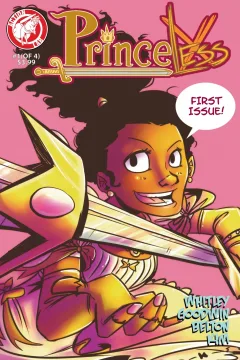
Jeremy Whitley writes inclusive comics across genres and age ranges: a hardheaded, heroic Black princess in a fairy tale, a bipolar teenage scientist in a superhero book, a disabled Black lesbian at the center of a romance. He's the creator of Princeless, the writer currently steering Marvel's Strange Tales, and a Durham, North Carolina native who sets much of his newest work in his own backyard.
We caught up with Jeremy to talk about his pull list, his local shop, how North Carolina shows up in his stories, and what's coming next.
For readers new to your work, how would you describe what you do?
I write inclusive and exciting comics and graphic novels across genres and age ranges. The thread running through all of my books is that I try to tell stories that excite me through characters and lenses I haven't seen in those settings before. That might mean a fairy tale with a hardheaded, heroic Black princess, a superhero story about a young scientist living with bipolar disorder, or a romance centered on a Black lesbian with cerebral palsy. There are often familiar beats and settings, but I like telling them from perspectives I've rarely seen used before.
What's on your own pull list right now, and what's the one book you'd be genuinely bummed to miss?
If I'm honest, my pull list has a lot of books made by my friends on it. I love the Galaxy stories coming out from Jadzia Axelrod and company, and I'm excited by the direction Absolute Wonder Woman is taking. I love Kelly Sue DeConnick's FML, and I think it's exciting what IDW is doing with Star Trek and their new horror and crime books.
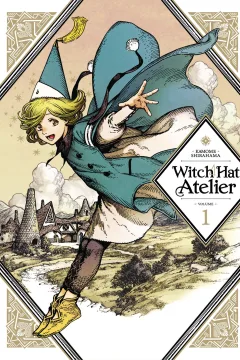
As for what I'd be bummed to miss, I'm as surprised as anyone that the book I'm most looking forward to right now is the manga Witch Hat Atelier. It's a beautiful book, and I genuinely never know what it has in store next.
Take us back: what's the comic that first made you fall in love with this medium?
Definitely X-Men. My dad was a big comic book nerd, and he used to take us to the shop as kids. He had varied tastes, but as a kid I got way into X-Men. I read a lot of stories over the years, but the one I always marked as "my story" was Age of Apocalypse. At the time, the only place with comics near us was a drug store with an old-school spinner rack. I tracked down and begged for every issue I could find, to the point that my dad drove us an hour away just to find the issue of Gambit and the X-Ternals I was missing.
When I got back into comics after college, X-Men was tied to that again. Discovering that they were continuing Buffy the Vampire Slayer in comic form is what made me track down a shop, and the writers on that Buffy comic led me to two other books: Joss Whedon's run on Astonishing X-Men and Brian K. Vaughan's Y: The Last Man. I loved Astonishing, but Y is easily the book most responsible for making me want to be a comic book writer. It did things I didn't realize you were allowed to do in comics.
Who's a creator working today you wish more people were reading?
There are a lot of incredible people working their butts off in comics who need more love: Ben Kahn, Lan Pitts, Tilly Bridges, Jadzia Axelrod, Stephanie Williams, The Kao, Maia Kobabe, Kyle Starks, Amy Chase, Benito Cereno, Danny Lore, Vita Ayala, Ryan Cady, Alyssa Wong, Dave Dwonch, Jules Rivera, Ryan Estrada, Bayleigh Underwood, and Bailee Rosenlund. I'll also shout out my longtime friends Ro and Ted, whose upcoming graphic novel Worst Man looks great.
Where do you buy your comics? Tell us about your shop.
I shop at Ultimate Comics Durham in Durham, North Carolina, though they also have locations in Raleigh and Cary.
Huge shout-out too to the Durham County Library, which keeps an incredible collection of comics and manga on hand. I wouldn't be able to read half of what I do if it weren't for our dedicated, awesome librarians.
You grew up in North Carolina and you're raising your family here. How has this place worked its way into your stories?
That's changed a lot for me over the last few years. My family, especially my wife and kids, has always shaped the stories I tell. My wife jokes that there's a version of her in everything I write, and she's not far off.
But until recently, I was pretty dismissive about setting stories in the places I've actually lived. I didn't think my life or my childhood was particularly interesting to anyone else. The older I get, though, the more I realize how much good it does people to see the world they know represented in comics, and the more I realize how cool the place I live now actually is. Durham is a uniquely culture-filled place. We have old institutions and old ghosts, but also a young, thriving arts community and a lot of queer folks. If there's such a thing as a "new, young, progressive South," it lives in places like Durham.
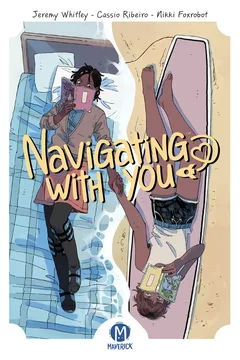
Navigating with You takes place largely in Durham, and a few other spots around the state. Other books I'm working on are set in stories I think are uniquely Southern, told through the lens of the queer and progressive folks who live here.
Princeless started because you wanted a hero your daughter could see herself in. What's it been like watching so many other kids find themselves in her too?
It's been wonderful. I love every book most while I'm making it, but Princeless is the one that feels closest to the thing I want left in the world representing me. Sharing it with excited little fans and princesses has been amazing. I still remember the first time someone showed up to a convention cosplaying as one of my characters. Forget celebrities, those are the people I want pictures with at cons.
I've also noticed a fairly new phenomenon over the last few years: adult women coming up to my table and saying, "You wrote Princeless? That was the comic that got me into comics," or "That was my first comic." It makes me feel very old, but when I do the math, if they're twenty-five now, Princeless started around the time they were ten, so I am incredibly old. Still, so many of those readers are librarians, teachers, or creators in their own right. They're still coming to conventions, still reading voraciously, still making things. I can't help but think I played some small part in that, and it's amazing.
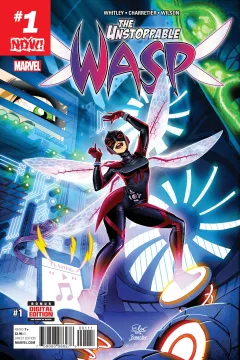
From The Unstoppable Wasp to Navigating with You, you put mental health and disability right at the center of the page. Why does telling those stories matter so much to you?
Comics has a pretty checkered past when it comes to portraying disability, especially mental health. We have a nasty history of casting people struggling with these issues as villains and murderers when more often they're the ones getting hurt. Characters like Daredevil get held up as advocacy wins, but a lot of villains created even into the 90s and 2000s were defined by mental illness or physical disability.
In reality, someone like Nadia having bipolar disorder is much less likely to create a villain than a hero who ends up hurting herself. The refusal to quit, the pushing past the point of harming your own health that we cheer in a character like Spider-Man, is exactly the kind of thing someone in a manic episode is likely to do in daily life. Telling stories where the hero goes through that helps readers understand it far better than making villains who need to be rounded up and institutionalized.
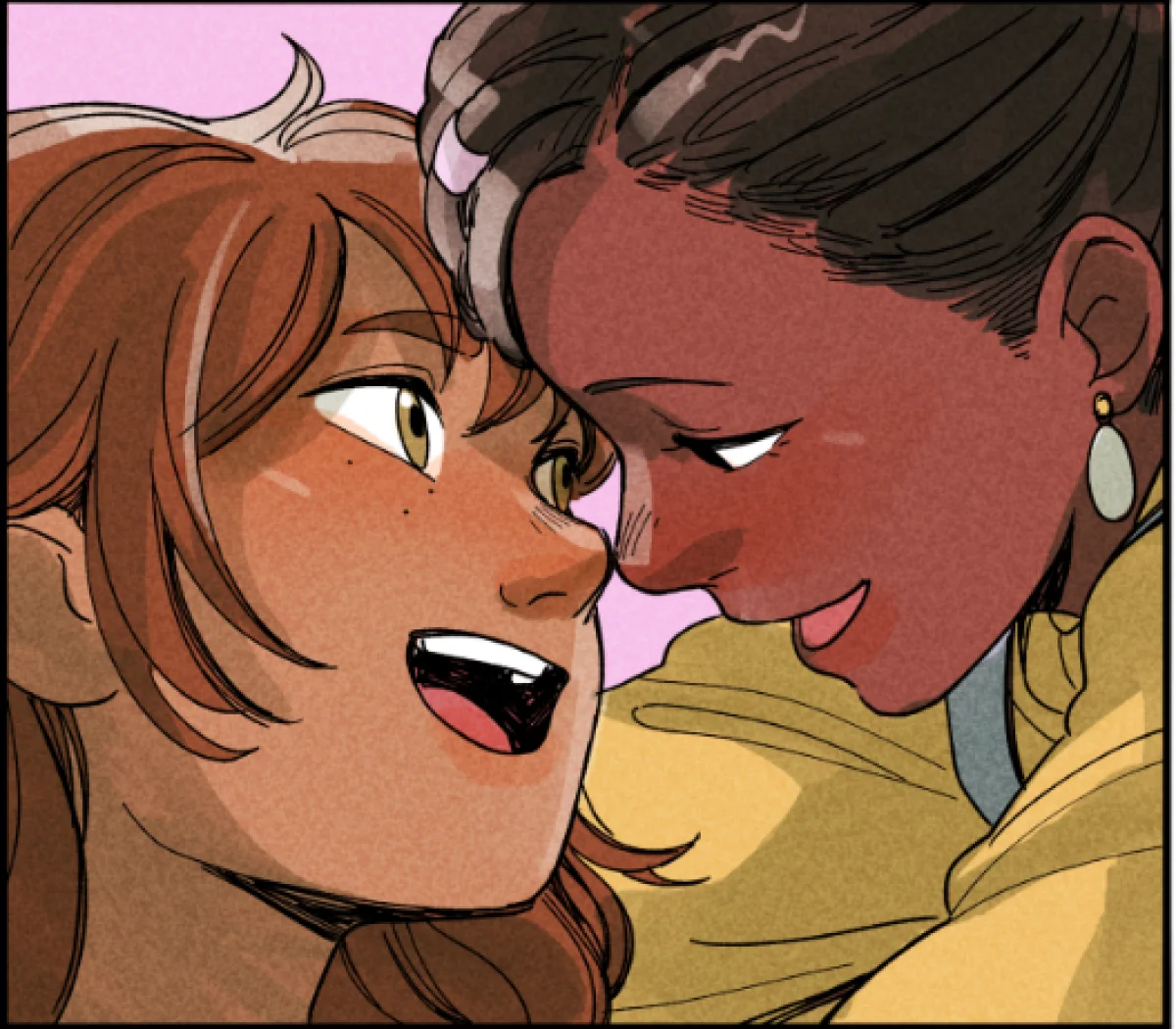
Comics also has an advantage here that the medium has mostly missed. Physical disability is something prose can describe, but readers are notoriously bad at holding that information and carrying it through a story. With a character like Neesha in Navigating with You, there's no page where the reader can forget she's living with a disability. Her braces don't disappear when she stops thinking about them, and having them exist concretely on the page makes them real in a way description can't.
There are so few romance stories that center a person with a disability that when I knew I was writing one, I wanted to make sure it featured a disabled woman, and not as a supporting character. She's the co-lead: someone who both expresses and receives affection and desire.
You also co-host Progressively Horrified. What draws you to horror, and has it ever crept into your comics?
I've loved horror movies for years. They get a bad rap because of an old reputation for being exploitative and "bro-y," but horror has always been a window into what terrifies us, what we fear lurks inside us, and the differences we worry make us monsters. The genre was invented by a queer woman, and from Frankenstein to Dracula to Pinhead, horror has always been full of queer creators telling stories about the things that terrify them and the ways they fear their own monstrousness.
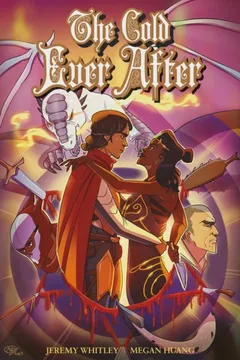
It's shown up in my own writing too, especially in The Cold Ever After, where the things the lead loves are the things actively killing her. Without love, there's no reason to face down those terrors and find a way to be who she really is.
You're on Strange Tales at Marvel right now. What's been the most fun to write lately?
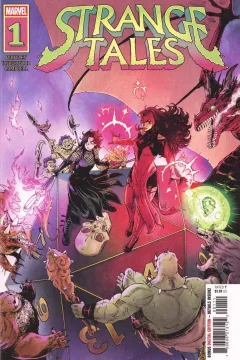
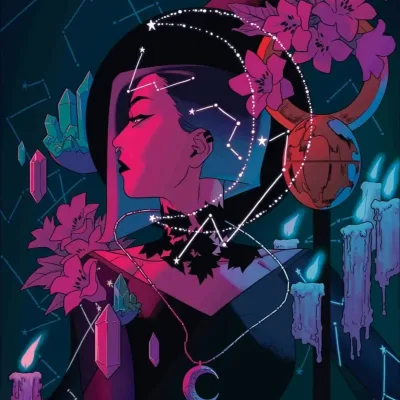
Strange Tales is a lot of fun. The best part of working with Marvel is getting to play in one of my favorite toy boxes. I'd never had the chance to write Nico Minoru before, and it was great to finally get that opportunity. If it were up to me, she'd be in as many books a month as Wolverine and Spider-Man. I especially love the spookier corners of the Marvel Universe, and even though I don't get to pick every character I use, it's nice to pull forward these horror-adjacent characters who don't get as much love.
What are you most excited about that readers should put on their radar today?
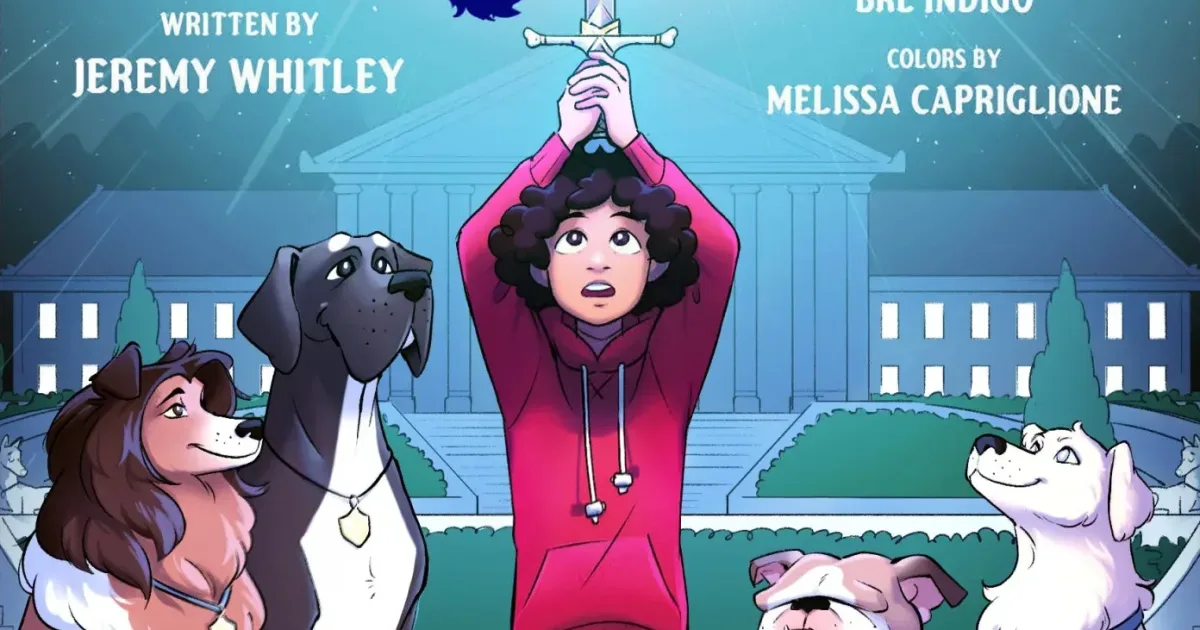
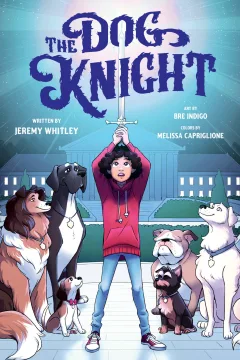
I'm excited to finally have a lot of books I've been working on for a long time coming out soon. We'll have a trade collection of Strange Tales in the next few months. On top of that, there's a sequel to Navigating with You coming in October, and the second volume of The Dog Knight arrives in February. I'm working on a lot of stories I really love right now, and I can't wait to share them with everyone.
Connect with Jeremy
Jeremy is currently writing Strange Tales for Marvel, with a Navigating with You sequel landing in October and The Dog Knight Vol. 2 following in February. Start with Princeless if you want the book he'd want left behind, and add his current work to your pull list so you don't miss what's next.
Thanks to Jeremy for such thoughtful, generous answers.
You're subscribed!
Thanks for joining our newsletter.
About the author
Hey, I'm Michael! As the creator and developer behind VerseDB, I get to combine my love for building software with a serious comic book habit. While I enjoy collecting, I'm ultimately in it for the stories they tell. For me, it's all about getting lost in a great narrative and appreciating the artwork. I built this platform to give readers and collectors a clean, organized place to catalog the issues, runs, and art that mean the most to them. Log your favorites and welcome to the community!
Start tracking your collection
Track what you own and follow the series you read.
See what other collectors are picking up.